茶文化 Tea in Chinese
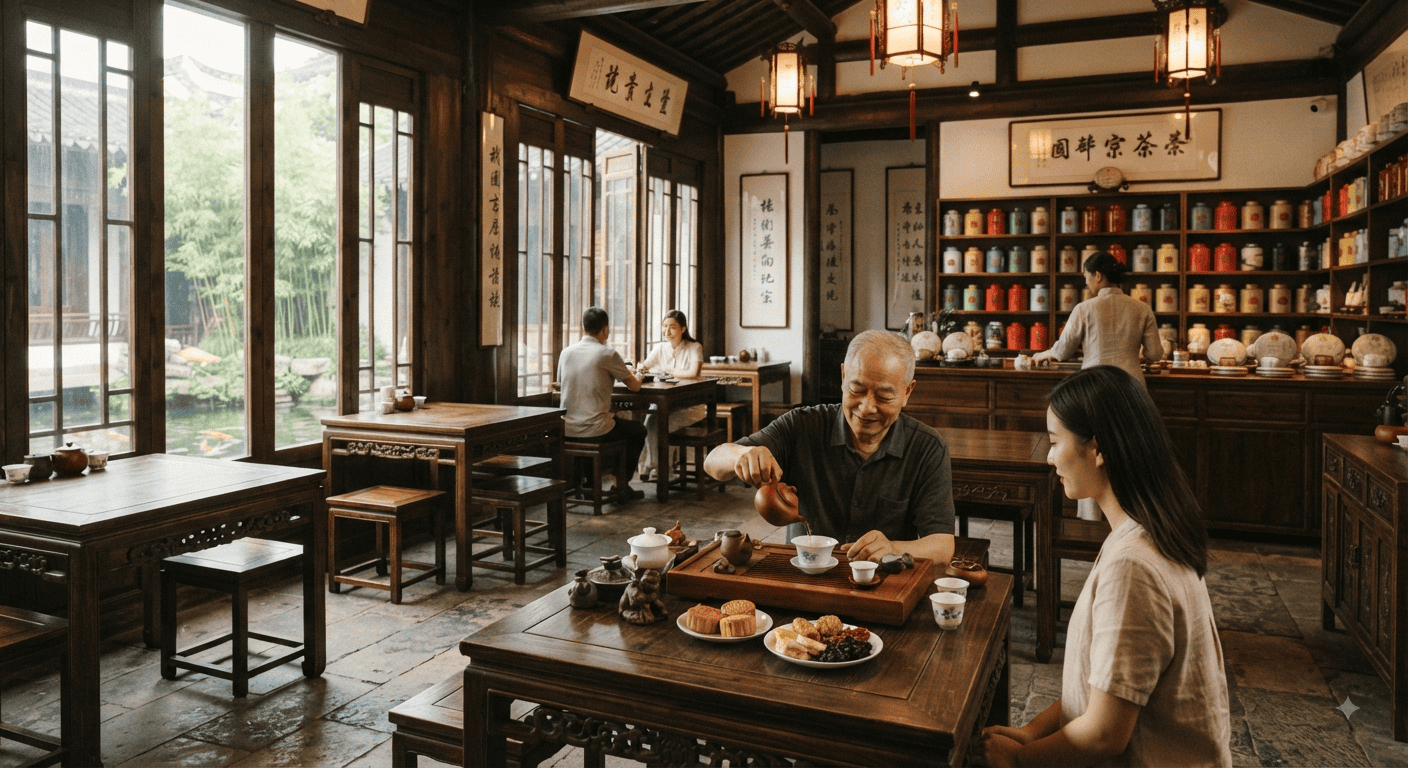
One character—茶 (chá)—covers everything from a grandmother’s afternoon pot of oolong to a plastic cup of bubble tea shaken to order on a street corner. This guide walks through both worlds: the traditional tea art and the vocabulary you’ll need to order your favorite modern drinks.
Famous Teas
A handful of teas that Taiwan and China are each especially known for.
Taiwan Teas
Mainland China Teas
How Tea Is Categorized
Green, white, oolong, black — they can all come from the exact same tea plant. What separates them is how much the leaves are allowed to oxidize (發酵发酵) after picking.
The same plant, six different results
綠茶绿茶 (Green tea) is heated right after picking, which stops oxidation entirely — keeping it grassy and fresh. 紅茶红茶 (Black tea) is fully oxidized before drying, turning the leaves dark and the flavor malty. 烏龍茶乌龙茶 (Oolong) sits in between, ranging from nearly green to nearly black. 黑茶黑茶 (Dark tea), like Pu-erh, is fermented by microbes after drying, much like aging cheese or wine.
Foreign Teas
Café menus in Taiwan and China carry plenty of familiar foreign teas too.
Bubble Tea & Toppings
Literally “hand-shaken drink” (手摇饮 shǒuyáoyǐn). The counter staff will expect you to specify your toppings, sugar, and ice levels.
Sugar Level (甜度)
Ice Level (冰块)
Learning to Brew & Culture
Kung Fu Tea isn’t Martial Arts (工夫茶)
The term 工夫 (gōngfu) here doesn’t mean fighting! It literally translates to “time and effort.” Gongfu tea refers to the traditional, meticulous process of brewing tea in small clay teapots with multiple short infusions, maximizing the flavor profile of the leaves.
Tea Pets (茶宠)
When you visit a traditional tea house, you might notice small clay animal figures on the tea tray. These are “Tea Pets” (茶宠 cháchǒng). It’s a fun tradition to pour leftover hot tea or the first steep over them for good luck and to season the clay.
Start on Yongkang Street (永康街)
If you’re in Taipei and want to actually sit down and learn, Yongkang Street is the classic starting point. It’s a small, walkable neighborhood dense with tea houses that run short brewing lessons for visitors. It’s an easy way to go from just ordering tea to understanding water temperature and steeping time.
The Idiom: 茶余饭后 (cháyú fànhòu)
Literally “after tea and after rice” — this idiom describes the unhurried stretch of leisure time after a meal, when people gather around to drink tea, chat, and gossip.

