Grammar Point:
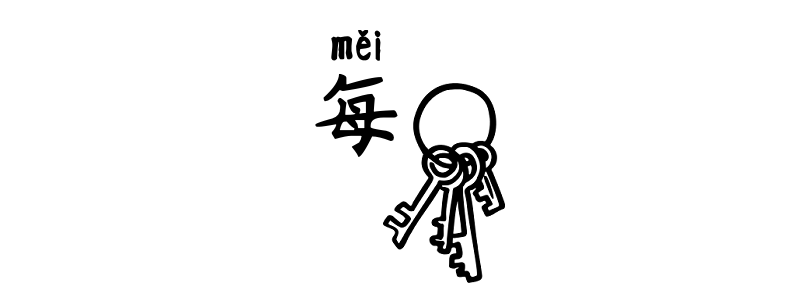
每 měi + time expression means “every / each + period of time”. It is used to talk about something that happens regularly or repeatedly.
Structure
每 měi + time expression + V (+ O)
他每天學中文他每天学中文
He studies Chinese every day.
我每星期上兩次課我每星期上两次课
I have class twice a week.
我每個月去一次旅行我每个月去一次旅行
I travel once every month.
The object can be placed either before or after “times.”
我每年回台灣我每年回台湾
I return to Taiwan every year.
每三天吃一次藥每三天吃一次药
Take medicine once every three days.
我每兩天運動一次我每两天运动一次
I exercise every two days.
火車十分鐘來一班火车十分钟来一班
A train comes every ten minutes.
📌 In daily conversation, when using the structure “每 + number + time + Verb + times,” 每 měi can sometimes be dropped.
每 měi with 就 jiù and 才 cái
他每半年去一次中國他每半年去一次中国
He goes to China once every six months.
It simply describes a routine frequency with no emotional tone, just neutral information.
他每半年就去一次中國他每半年就去一次中国
He goes to China every six months (already!).
就 jiù adds emphasis and suggests that something happens “already that often,” sometimes with a sense of surprise or expectation.
他每半年才去一次中國他每半年才去一次中国
He only goes to China once every six months.
才 cái expresses low frequency, implying that something happens too infrequently from the speaker’s perspective and focusing on the idea that it is not enough.

