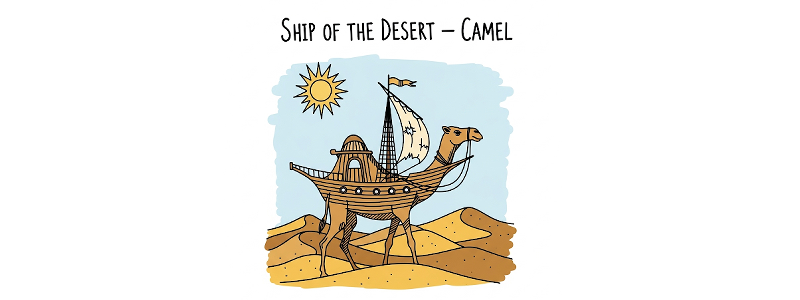
Ship of the Desert
Vocabulary
region, area
這個地區的夏天又熱又濕。这个地区的夏天又热又湿。
Summers in this region are hot and humid.
desert
我們在沙漠裡看到了很美的星空。我们在沙漠里看到了很美的星空。
We saw a beautiful starry sky in the desert.
environment, surroundings
他希望找一個安靜的環境學習。他希望找一个安静的环境学习。
He hopes to find a quiet place to study.
camel
我第一次騎駱駝,覺得有一點緊張。我第一次骑骆驼,觉得有一点紧张。
It was my first time riding a camel, and I felt a little nervous.
to rely on, to depend on
他畢業以後不想再依靠父母。他毕业以后不想再依靠父母。
After graduating, he doesn’t want to rely on his parents anymore.
to store, to save
我的手機裡儲存了很多旅行的照片。我的手机里储存了很多旅行的照片。
My phone has lots of travel photos stored on it.
fat
這種牛奶的脂肪比較少。这种牛奶的脂肪比较少。
This kind of milk is lower in fat.
pocket, pouch
袋鼠媽媽把孩子放在口袋裡。袋鼠妈妈把孩子放在口袋里。
The mother kangaroo keeps her baby in her pouch.
to mix
把紅色和藍色混在一起,就會變成紫色。把红色和蓝色混在一起,就会变成紫色。
Mix red and blue together and you get purple.
cactus
仙人掌很好照顧,一個星期澆一次水就夠了。仙人掌很好照顾,一个星期浇一次水就够了。
Cacti are easy to care for; watering once a week is enough.
Reading Passage
世界上有些地区是一大片沙漠。那里既没有树,也没有水。旅行者必须自己带食物和水。在这样不好的环境下,能穿过沙漠的动物就只有骆驼。它们可以长时间不吃不喝,只需要依靠身体里储存的东西生活,而且平均寿命长达40至69年。
它们能够搬重物,也可以载人穿过沙漠,所以人们叫骆驼“沙漠之舟”。骆驼的身体可以储存脂肪,然后它的胃里有十二个又深又大的口袋可以储存水。
每个口袋都有一个能关起来的开口,所以食物不会和水混在一起。在沙漠行走时,骆驼每次口渴都能自己从胃里的口袋里拿出水来喝,非常方便。
骆驼主要的食物是绿色植物。虽然在沙漠中没有很多绿色植物,但是骆驼的嘴巴非常厉害,连仙人掌都可以吃下去。
Shìjiè shàng yǒuxiē dìqū shì yí dà piàn shāmò. Nàlǐ jì méiyǒu shù, yě méiyǒu shuǐ. Lǚxíngzhě bìxū zìjǐ dài shíwù hé shuǐ. Zài zhèyàng bù hǎo de huánjìng xià, néng chuānguò shāmò de dòngwù jiù zhǐyǒu luòtuó. Tāmen kěyǐ cháng shíjiān bù chī bù hē, zhǐ xūyào yīkào shēntǐ lǐ chǔcún de dōngxi shēnghuó, érqiě píngjūn shòumìng cháng dá sìshí zhì liùshíjiǔ nián.
Tāmen nénggòu bān zhòngwù, yě kěyǐ zài rén chuānguò shāmò, suǒyǐ rénmen jiào luòtuó “shāmò zhī zhōu”. Luòtuó de shēntǐ kěyǐ chǔcún zhīfáng, ránhòu tā de wèi lǐ yǒu shí’èr ge yòu shēn yòu dà de kǒudài kěyǐ chǔcún shuǐ.
Měi ge kǒudài dōu yǒu yí ge néng guān qǐlái de kāikǒu, suǒyǐ shíwù bú huì hé shuǐ hùn zài yìqǐ. Zài shāmò xíngzǒu shí, luòtuó měi cì kǒu kě dōu néng zìjǐ cóng wèi lǐ de kǒudài lǐ ná chū shuǐ lái hē, fēicháng fāngbiàn.
Luòtuó zhǔyào de shíwù shì lǜsè zhíwù. Suīrán zài shāmò zhōng méiyǒu hěn duō lǜsè zhíwù, dànshì luòtuó de zuǐba fēicháng lìhai, lián xiānrénzhǎng dōu kěyǐ chī xiàqù.
In some parts of the world, there are vast deserts. There are neither trees nor water. Travelers must bring their own food and water. In such harsh conditions, the only animals that can cross the desert are camels. They can survive for long periods without eating or drinking, relying only on what is stored in their bodies, and their average lifespan is as long as 40 to 69 years.
Camels can carry heavy loads and also transport people across the desert, which is why they are called the “ships of the desert.” Their bodies can store fat, and their stomachs have twelve deep, large sacs that can hold water.
Each sac has an opening that can be closed, so food and water don’t mix together. While traveling through the desert, whenever a camel feels thirsty, it can draw water from one of these sacs in its stomach — very convenient.
The main food of camels is green plants. Although there are not many green plants in the desert, camels have very strong mouths and can even eat cacti.
Comprehension Questions
為什麼人們叫駱駝「沙漠之舟」?为什么人们叫骆驼“沙漠之舟”?
駱駝胃裡的十二個口袋有什麼用?骆驼胃里的十二个口袋有什么用?
為什麼食物和水不會混在一起?为什么食物和水不会混在一起?
駱駝的嘴巴有什麼特點?骆驼的嘴巴有什么特点?
駱駝在沙漠裡為什麼很方便?骆驼在沙漠里为什么很方便?
Did this lesson help you? 🙂
If you enjoyed practicing with this page, consider buying me a coffee — it helps keep new lessons like this one coming.
☕ Buy me a coffee