著着 zhe shows that an action or state is continuing. It’s common in stories and descriptions, while in everyday conversation people usually use 在在 zài for actions in progress.
The key difference: 在在 zài describes an action happening, while V + 著着 zhe describes a state that stays after the action, like sitting, standing, wearing, or a door that’s open.
1When Do We Use It?
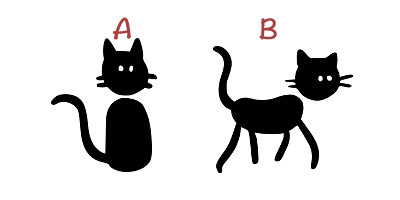
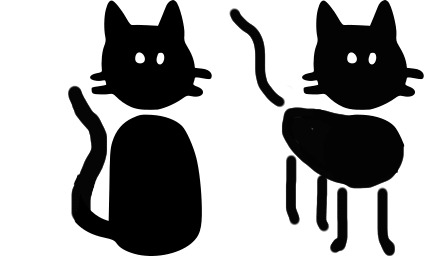
How would you describe these two pictures?
Picture A · Picture B
If your answer is 貓在坐猫在坐 māo zài zuò, you’ve come to the right article! 貓在坐猫在坐 māo zài zuò actually describes this one, the action of sitting down:
To describe a state that doesn’t just happen and stop right away, use 著着 zhe:
貓坐著猫坐着
Picture A: The cat is sitting.
貓站著猫站着
Picture B: The cat is standing.
2V + 著着 zhe
The continuation of an action or state
貓在冰箱上睡著猫在冰箱上睡着
The cat is sleeping on the fridge.
Sleeping here is a state, not an action, so don’t use 在在 zài.
門開著门开着
The door is open.
Being open is a state, not an action, so don’t use 在在 zài.
那個看著書的女孩是我的女兒那个看着书的女孩是我的女儿
The girl reading the book is my daughter.
Here 在在 zài would also work.
Sometimes 著着 zhe and 在在 zài are not interchangeable:
他在穿衣服他在穿衣服
He’s putting on his clothes. (the action)
他穿著衣服他穿着衣服
He’s wearing clothes. (the state)
But when the action is a long, ongoing process, they are interchangeable:
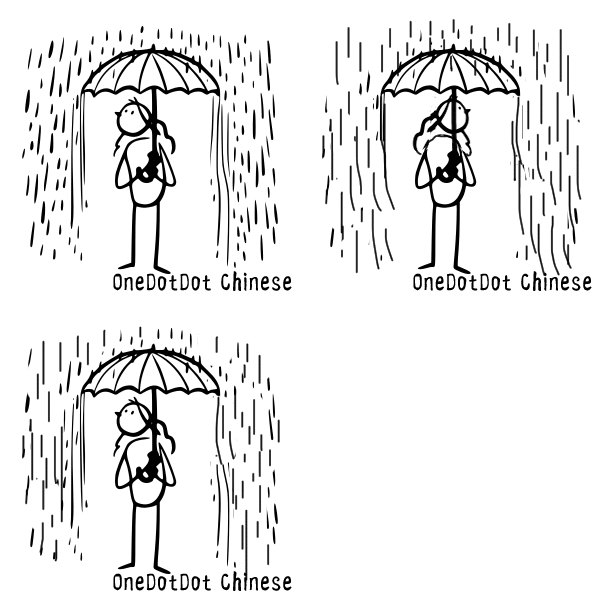
外面在下雨外面在下雨
It’s raining outside.
外面下著雨外面下着雨
It’s raining outside.
爺爺在看電視爷爷在看电视
Grandpa is watching TV.
爺爺看著電視爷爷看着电视
Grandpa is watching TV.
Giving a command
你等著,我很快回來你等着,我很快回来
Wait here. I’ll be right back.
聽著,我現在要說的話很重要听着,我现在要说的话很重要
Listen. What I’m about to say is important.
好好看著,這就是我跟你的不同好好看着,这就是我跟你的不同
Watch closely. This is the difference between you and me.
3V1 + 著着 zhe + V2
Two actions happen at the same time. The first one (with 著着 zhe) is the accompanying state or manner, and the second one is the main action.
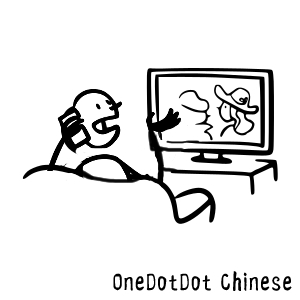
他看著電視講電話他看着电视讲电话
He’s watching TV while talking on the phone.
Talking on the phone is the main action.
姐姐坐著看書姐姐坐着看书
My older sister is sitting and reading.
Reading is the main action.
他唱著歌上廁所他唱着歌上厕所
He’s singing while on the toilet.
Using the toilet is the main action.
4V + 著着 zhe + V + 著着 zhe + 就就 jiù … 了了 le
While doing something, a new action or state suddenly happens. This 了了 le is 了了₂ le. The two verbs must be the same.
姐姐看著看著就睡了姐姐看着看着就睡了
My older sister fell asleep while reading.
他說著說著就哭了他说着说着就哭了
He started crying as he was talking.
5S + 是是 shì + V + 著着 zhe + 玩的玩的 wán de
The action is just for fun, not serious.
我是說著玩的,我怎麼可能真的生10個孩子我是说着玩的,我怎么可能真的生10个孩子
I was just joking! How could I really have 10 kids?
中文我不是學著玩的,我是真的準備要去中國中文我不是学着玩的,我是真的准备要去中国
I’m not learning Chinese just for fun. I’m really getting ready to go to China.
6Common Mistakes
❌貓在坐猫在坐
✅貓坐著猫坐着
“The cat is sitting” describes a state. 在坐在坐 zài zuò would mean the cat is in the middle of sitting down.
❌門在開门在开
✅門開著门开着
“The door is open” is a state, not an action in progress, so use 著着 zhe.
7Practice
For 01–05, describe the picture using V + 著着 zhe. For 06–08, translate into Chinese. Tap the card to check your answer.