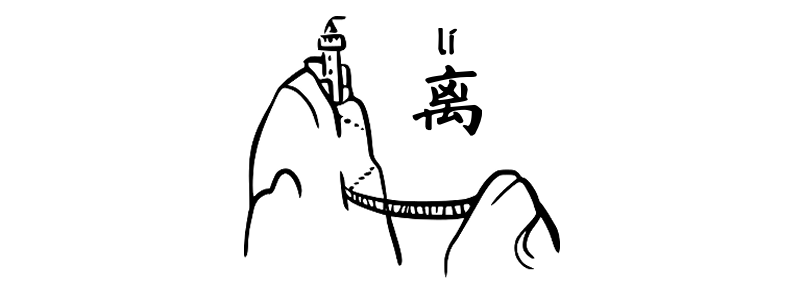
The basic pattern is A 離离 lí B + how far. “How far” can be 近近 jìn / 遠远 yuǎn, an exact distance, or how long it takes to get there.
1Structure
A 離离 lí B + 近近 jìn / 遠远 yuǎn
日本離韓國非常近
日本离韩国非常近
Japan is very close to Korea.
加拿大離墨西哥不太遠
加拿大离墨西哥不太远
Canada isn’t too far from Mexico.
我公司離車站很近
我公司离车站很近
My office is very close to the station.
為什麼我離成功那麼遠?
为什么我离成功那么远?
Why am I so far from success? 😭
雖然你就站在我眼前,但是我感覺你離我好遠
虽然你就站在我眼前,但是我感觉你离我好远
Even though you’re standing right in front of me, you feel so far away.
你離我遠點!
你离我远点!
Stay away from me!
A 離离 lí B + number + measure word
我家離學校5公里
我家离学校5公里
My home is 5 km from school.
媽媽家離我公司300公尺
妈妈家离我公司300米
Mom’s place is 300 m from my office.
現在離聖誕節還有一個月
现在离圣诞节还有一个月
There’s still a month to go until Christmas.
你想去的咖啡店離這裡差不多700公尺
你想去的咖啡店离这儿差不多700米
The coffee shop you want to go to is about 700 m from here.
我離適婚年齡只剩3天!
我离适婚年龄只剩3天!
I’m only 3 days away from “marriageable age”!
🏮 Culture Note
Taiwanese people love to say “age is just a number” when it comes to love. But when it comes to marriage, age can be a pretty important number. According to 2024 statistics, the average age at first marriage in Taiwan is around 32.2 for men and around 30 for women, quite high compared to many other countries.
Why? 43% of Taiwanese say they don’t want to get married. It’s still common to live with your parents until you marry, and with housing prices so high, many young people delay marriage until they can afford a home, or give up on the idea altogether.
你離成功只剩一步的距離
你离成功只剩一步的距离
You’re only one step away from success.
Distance words you may need
公里公里gōnglǐgōnglǐkilometer
公分厘米gōngfēnlímǐcentimeter
📚 Vocabulary of locations
A 離离 lí B + way of getting there + time
我家離咖啡店走路5分鐘
我家离咖啡店走路5分钟
My home is a 5-minute walk from the coffee shop.
這裡離海邊開車1小時
这里离海边开车1小时
It’s a one-hour drive from here to the beach.
公司離我租的房子騎腳踏車20分鐘
公司离我租的房子骑自行车20分钟
The office is a 20-minute bike ride from the place I rent.
學校離你家開車要多久?
学校离你家开车要多久?
How long does it take to drive from your home to school?
📌 離离 lí vs. 從从 cóng
離离 lí measures the distance between two points. It doesn’t describe movement:
我家離學校很近我家离学校很近
My home is close to school.
從从 cóng marks the starting point of a movement:
我從學校走回家我从学校走回家
I walk home from school.
2Common Mistakes
❌
我家很近離學校
我家很近离学校
✅
我家離學校很近
我家离学校很近
Unlike English (“close to school”), the 離离 lí + B phrase comes before 近近 jìn / 遠远 yuǎn.
❌
我家從學校很遠
我家从学校很远
✅
我家離學校很遠
我家离学校很远
To talk about how far apart two places are, use 離离 lí, not 從从 cóng.
3Practice
Translate each sentence into Chinese, then tap the card to check your answer.
01The airport is far from downtown.
機場離市區很遠
机场离市区很远。
👆 Tap to reveal
02Is your home far from here?
你家離這裡遠嗎
你家离这里远吗?
👆 Tap to reveal
03The station is two kilometers from my home.
車站離我家兩公里
车站离我家两公里。
👆 Tap to reveal
04The park is a 10-minute walk from school.
公園離學校走路十分鐘
公园离学校走路十分钟。
👆 Tap to reveal
05There’s only one week left until my birthday.
現在離我的生日只剩一個星期了
现在离我的生日只剩一个星期了。
👆 Tap to reveal
06How long does it take by bus from here to Taipei?
這裡離台北坐公車要多久
这里离台北坐公交车要多久?
👆 Tap to reveal
07Taiwan isn’t far from Japan.
台灣離日本不遠
台湾离日本不远。
👆 Tap to reveal
08Stay away from that dog!
你離那隻狗遠一點
你离那只狗远一点!
👆 Tap to reveal
