Skip to content

OneDotDot Chinese

Learn a little Chinese every day

Menu
  • Vocabulary
  • Grammar
  • Resources
  • Practice
  • Shop
Menu

Written Version of 就 jiù — 便 biàn

Posted on October 21, 2026October 21, 2026 by tiffany

Table of Contents

Toggle
  • 1Structure
  • 2Common Mistakes
  • 3Practice

  • Text Display
  • ►Traditional
  • ►Simplified
  • Pinyin Display
  • ►Visible
  • ►Mouseover
  • ►Hidden
OneDotDot Chinese
Grammar · HSK 5
Grammar Point · HSK 5

“Then / Right Away” — 便便 biàn

As an adverb, 便便 biàn means “then,” “right away,” or “already.” It’s the more formal, written version of 就就 jiù, common in stories, news, and essays.

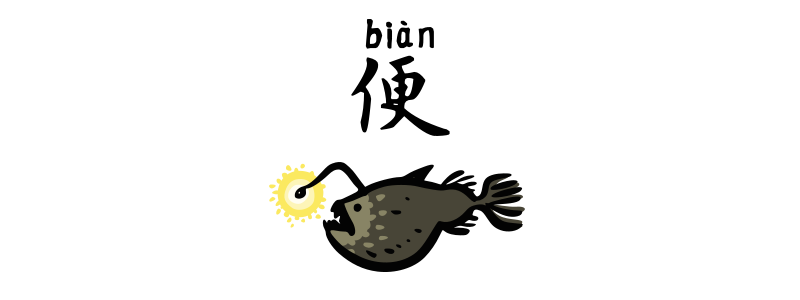
便 biàn in Chinese

Wherever 便便 biàn appears in these patterns, you could say 就就 jiù in casual speech. Like 就就 jiù, it always goes after the subject and right before the verb.

1Structure

(S +) 一一 yī + V₁,(S +) 便便 biàn + V₂: “as soon as”

他tā一yì回到huídào家jiā便biàn倒dǎo在zài沙發shāfā上shàng睡著shuìzháo了le 他tā一yì回到huídào家jiā便biàn倒dǎo在zài沙发shāfā上shang睡着shuìzháo了le
As soon as he got home, he collapsed on the sofa and fell asleep.
我wǒ一yí看到kàndào那nà封fēng信xìn,便biàn明白míngbái了le一切yíqiè 我wǒ一yí看到kàndào那nà封fēng信xìn,便biàn明白míngbai了le一切yíqiè
The moment I saw that letter, I understood everything.
天tiān一yì黑hēi,路燈lùdēng便biàn亮liàng了le起來qǐlái 天tiān一yì黑hēi,路灯lùdēng便biàn亮liàng了le起来qǐlai
As soon as it got dark, the streetlights came on.
她tā一yì聽到tīngdào這zhè個ge消息xiāoxí,便biàn哭kū了le出來chūlái 她tā一yì听到tīngdào这zhè个ge消息xiāoxi,便biàn哭kū了le出来chūlai
The moment she heard the news, she burst into tears.

只要只要 zhǐyào / 如果如果 rúguǒ + Condition,(S +) 便便 biàn + Result

只要zhǐyào多duō練習liànxí,便biàn能néng說shuō得de更gèng流利liúlì 只要zhǐyào多duō练习liànxí,便biàn能néng说shuō得de更gèng流利liúlì
As long as you practice more, you’ll be able to speak more fluently.
如果rúguǒ明天míngtiān下雨xiàyǔ,比賽bǐsài便biàn取消qǔxiāo 如果rúguǒ明天míngtiān下雨xiàyǔ,比赛bǐsài便biàn取消qǔxiāo
If it rains tomorrow, the game will be canceled.
只要zhǐyào按àn下xià這zhè個ge按鈕ànniǔ,機器jīqì便biàn會huì自動zìdòng停止tíngzhǐ 只要zhǐyào按àn下xià这zhè个ge按钮ànniǔ,机器jīqì便biàn会huì自动zìdòng停止tíngzhǐ
Just press this button and the machine will stop automatically.
有yǒu任何rènhé問題wèntí,便biàn可以kěyǐ直接zhíjiē聯絡liánluò客服kèfú 有yǒu任何rènhé问题wèntí,便biàn可以kěyǐ直接zhíjiē联系liánxì客服kèfú
If you have any questions, you can contact customer service directly.

Time / Age + 便便 biàn + V: “already, as early as”

Stresses that something happened early or quickly.

他tā十八shíbā歲suì便biàn離開líkāi家鄉jiāxiāng,到dào台北Táiběi工作gōngzuò 他tā十八shíbā岁suì便biàn离开líkāi家乡jiāxiāng,到dào台北Táiběi工作gōngzuò
He left his hometown at just eighteen to work in Taipei.
這zhè家jiā店diàn早上zǎoshàng六liù點diǎn便biàn開門kāimén了le 这zhè家jiā店diàn早上zǎoshang六liù点diǎn便biàn开门kāimén了le
This shop already opens at six in the morning.
她tā三sān歲suì便biàn開始kāishǐ學xué鋼琴gāngqín 她tā三sān岁suì便biàn开始kāishǐ学xué钢琴gāngqín
She started learning piano when she was only three.
不bú到dào一yí個ge小時xiǎoshí,票piào便biàn全部quánbù賣mài完wán了le 不bú到dào一yí个ge小时xiǎoshí,票piào便biàn全部quánbù卖mài完wán了le
In less than an hour, the tickets had all sold out.

V₁ (了)…,(S +) 便便 biàn + V₂: “and then”

In narration, 便便 biàn links two actions that happen one right after the other.

他tā說shuō完wán這zhè句jù話huà,便biàn轉身zhuǎnshēn離開líkāi了le 他tā说shuō完wán这zhè句jù话huà,便biàn转身zhuǎnshēn离开líkāi了le
After saying that, he turned and left.
吃chī完wán晚飯wǎnfàn,我們wǒmen便biàn去qù河邊hébiān散步sànbù 吃chī完wán晚饭wǎnfàn,我们wǒmen便biàn去qù河边hébiān散步sànbù
After dinner, we went for a walk by the river.
老師lǎoshī簡單jiǎndān介紹jièshào了le一下yíxià,便biàn開始kāishǐ上課shàngkè 老师lǎoshī简单jiǎndān介绍jièshào了le一下yíxià,便biàn开始kāishǐ上课shàngkè
The teacher gave a quick introduction and then started the class.
他tā把bǎ行李xínglǐ放fàng好hǎo,便biàn出門chūmén了le 他tā把bǎ行李xíngli放fàng好hǎo,便biàn出门chūmén了le
He put his luggage away and then went out.
📌 便便 biàn vs. 就就 jiù

In all the patterns above, 便便 biàn = 就就 jiù, just more formal. But 就就 jiù has many other uses that 便便 biàn doesn’t, such as “only” or emphasis with 就是就是 jiùshì.

他tā一yí到dào就jiù開始kāishǐ工作gōngzuò了le他tā一yí到dào就jiù开始kāishǐ工作gōngzuò了le
He started working the moment he arrived. (spoken)
他tā一yí到dào便biàn開始kāishǐ工作gōngzuò他tā一yí到dào便biàn开始kāishǐ工作gōngzuò
He began working immediately upon arrival. (written)
💡 Two pronunciations

便便 has two readings. As an adverb and in words like 方便方便 fāngbiàn (“convenient”) and 隨便随便 suíbiàn (“casual, whatever”), it’s biàn. But in 便宜便宜 piányí (“cheap”), it’s pián.

2Common Mistakes

❌ 他tā一yì回huí家jiā,便biàn他tā睡shuì了le 他tā一yì回huí家jiā,便biàn他tā睡shuì了le
✅ 他tā一yì回huí家jiā,便biàn睡shuì了le 他tā一yì回huí家jiā,便biàn睡shuì了le
便便 biàn is an adverb. It goes after the subject and right before the verb, never before the subject.
❌ 我wǒ便biàn是shì王Wáng老師lǎoshī 我wǒ便biàn是shì王Wáng老师lǎoshī
✅ 我wǒ就jiù是shì王Wáng老師lǎoshī 我wǒ就jiù是shì王Wáng老师lǎoshī
便便 biàn can’t replace emphatic 就是就是 jiùshì (“I’m the one…”). It only replaces 就就 jiù in the meanings of “then, right away, already.”

3Practice

Translate each sentence into Chinese, then tap the card to check your answer.

01As soon as the class ended, the students ran outside.
一yí下課xiàkè,學生們xuéshēngmen便biàn跑pǎo了le出去chūqù 一yí下课xiàkè,学生们xuéshengmen便biàn跑pǎo了le出去chūqu。
👆 Tap to reveal
02As long as you follow the instructions, you’ll get it right.
只要zhǐyào按照ànzhào說明shuōmíng做zuò,便biàn不bú會huì出錯chūcuò 只要zhǐyào按照ànzhào说明shuōmíng做zuò,便biàn不bú会huì出错chūcuò。
👆 Tap to reveal
03He could already read at four.
他tā四sì歲suì便biàn會huì看kàn書shū了le 他tā四sì岁suì便biàn会huì看kàn书shū了le。
👆 Tap to reveal
04After finishing the report, she went home.
寫xiě完wán報告bàogào,她tā便biàn回家huíjiā了le 写xiě完wán报告bàogào,她tā便biàn回家huíjiā了le。
👆 Tap to reveal
05If you are not satisfied, you can return it within seven days.
如果rúguǒ不bù滿意mǎnyì,七qī天tiān內nèi便biàn可以kěyǐ退貨tuìhuò 如果rúguǒ不bù满意mǎnyì,七qī天tiān内nèi便biàn可以kěyǐ退货tuìhuò。
👆 Tap to reveal
06The moment he saw me, he smiled.
他tā一yí看到kàndào我wǒ,便biàn笑xiào了le 他tā一yí看到kàndào我wǒ,便biàn笑xiào了le。
👆 Tap to reveal
07In just three months, the store had already closed.
才cái三sān個ge月yuè,那nà家jiā店diàn便biàn關門guānmén了le 才cái三sān个ge月yuè,那nà家jiā店diàn便biàn关门guānmén了le。
👆 Tap to reveal
08She drank a glass of water and then went to bed.
她tā喝hē了le一yì杯bēi水shuǐ,便biàn去qù睡覺shuìjiào了le 她tā喝hē了le一yì杯bēi水shuǐ,便biàn去qù睡觉shuìjiào了le。
👆 Tap to reveal

Related Grammar

→“So That” — 以便以便 yǐbiàn(HSK 6) →就就 jiù Chinese Grammar

Enjoyed this post? Buy me a coffee so I can keep writing more of these ☕

Support OneDotDot Chinese

Level Checker

Free tool for HSK Check a text → Free tool for TOCFL Check a text →

Free Level Test

10 min · No sign-up Start the HSK TEST → 10 min · No sign-up Start the TOCFL TEST →
當代中文当代中文 · Series

Contemporary Chinese

Volume Book 1 Volume Book 2 Coming Soon Book 3 Coming Soon Book 4
中文聽說讀寫中文听说读写 · Series

INTEGRATED CHINESE

Coming Soon Book 1 Coming Soon Book 2 Coming Soon Book 3 Coming Soon Book 4

OneDotDot Chinese

When a foreign friend says their Chinese is "yì diǎn diǎn" (just a little), this site exists to make that little bit grow, one day at a time.

  ABOUT

  About Me
  Special Thanks
  My Students Only

  CONTACT

  LinkedIn
  Instagram
  Privacy Policy

© 2026 OneDotDot Chinese | Powered by Superbs Personal Blog theme