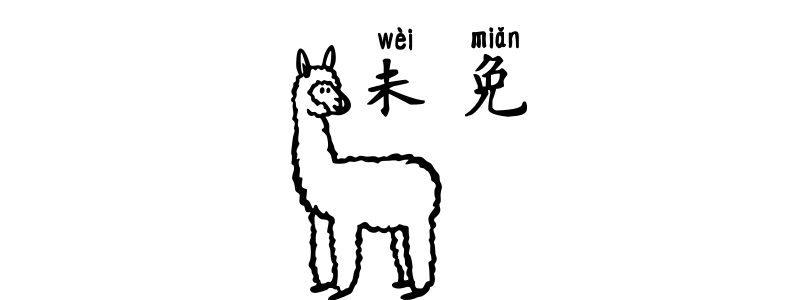
未免未免 wèimiǎn softens criticism, making it sound tactful rather than blunt. It’s almost always followed by a degree word like 太太 tài, 有點有点 yǒudiǎn, or 過於过于 guòyú, and the sentence often ends with 了了 le or 吧吧 ba.
1Structure
S + 未免未免 wèimiǎn + 太太 tài / 有點有点 yǒudiǎn / 過於过于 guòyú + Adj (+ 了了 le / 吧吧 ba)
Comments that a quality is a bit excessive: too expensive, too strict, too impatient.
你這樣說,未免太誇張了吧
你这样说,未免太夸张了吧
Saying it like that is a bit over the top, don’t you think?
為了這點小事生氣,你也未免太小氣了
为了这点小事生气,你也未免太小气了
Getting angry over such a small thing? That’s a bit petty of you.
這家餐廳的價格未免有點貴
这家餐厅的价格未免有点贵
The prices at this restaurant are a bit on the high side.
他對孩子的要求未免過於嚴格
他对孩子的要求未免过于严格
His expectations of his kids are rather too strict.
才學了三個月就想考高級,未免太心急了
才学了三个月就想考高级,未免太心急了
Wanting to take the advanced exam after only three months is a bit too impatient.
S + 未免未免 wèimiǎn + VP / Evaluation
未免未免 wèimiǎn can also come before an evaluating phrase, such as “unfair,” “too early,” or “a pity.”
只看一次考試成績就否定一個學生,未免不太公平
只看一次考试成绩就否定一个学生,未免不太公平
Writing off a student based on one test score is a little unfair.
現在就下結論,未免為時過早
现在就下结论,未免为时过早
Drawing a conclusion now would be a bit premature.
花了這麼多錢卻沒有效果,未免有些可惜
花了这么多钱却没有效果,未免有些可惜
Spending so much money with no results is rather a shame.
你連問都不問就做決定,未免太不尊重人了
你连问都不问就做决定,未免太不尊重人了
Making the decision without even asking is a bit disrespectful.
📌 Softer than a direct criticism
Compare a blunt comment with a 未免未免 wèimiǎn comment. Both criticize, but 未免未免 wèimiǎn sounds more measured, like “isn’t that a little…?”
你太小氣了你太小气了
You’re so stingy. (blunt)
你未免太小氣了吧你未免太小气了吧
Isn’t that a bit stingy of you? (more tactful)
2未免未免 wèimiǎn vs. 不免不免 bùmiǎn vs. 難免难免 nánmiǎn
These three look alike, and learners often mix them up. Only 未免未免 wèimiǎn expresses criticism. The other two describe something that naturally or inevitably happens.
| 未免未免 wèimiǎn | 不免不免 bùmiǎn | 難免难免 nánmiǎn |
|---|
| Meaning | a bit too, rather | can’t help but; naturally | hard to avoid |
| Speaker’s attitude | Mild criticism or disapproval | Neutral, describing a natural reaction | Neutral or understanding |
| Typical example | 未免太貴了未免太贵了 | 不免有點緊張不免有点紧张 | 難免會犯錯难免会犯错 |
第一次上臺演講,不免有點緊張
第一次上台演讲,不免有点紧张
The first time giving a speech, you can’t help feeling a bit nervous.
不免不免 bùmiǎn: a natural reaction, no criticism.
學外語難免會犯錯
学外语难免会犯错
When learning a foreign language, mistakes are hard to avoid.
難免难免 nánmiǎn: something that’s bound to happen, said with understanding.
3Common Mistakes
❌
第一次見家長,未免有點緊張
第一次见家长,未免有点紧张
✅
第一次見家長,不免有點緊張
第一次见家长,不免有点紧张
Feeling nervous when meeting the parents for the first time is a natural reaction, not something to criticize. Use 不免不免 bùmiǎn (or 難免难免 nánmiǎn), not 未免未免 wèimiǎn.
❌
這部電影未免很好看
这部电影未免很好看
✅
這部電影未免太長了
这部电影未免太长了
未免未免 wèimiǎn expresses disapproval, so it doesn’t go with compliments. It also needs a degree word like 太太 tài, not 很很 hěn.
4Practice
Translate each sentence into Chinese, then tap the card to check your answer.
01Isn’t it a bit too late to call now?
現在打電話,未免太晚了吧
现在打电话,未免太晚了吧?
👆 Tap to reveal
02Your demands are rather unreasonable.
你的要求未免太不合理了
你的要求未免太不合理了。
👆 Tap to reveal
03Judging someone by their appearance is a bit superficial.
只看外表就評價一個人,未免太膚淺了
只看外表就评价一个人,未免太肤浅了。
👆 Tap to reveal
04This plan is rather too risky.
這個計畫未免過於冒險
这个计划未免过于冒险。
👆 Tap to reveal
05Quitting after just one failure is a bit of a pity.
失敗一次就放棄,未免有些可惜
失败一次就放弃,未免有些可惜。
👆 Tap to reveal
06Isn’t it a bit too early to celebrate?
現在就慶祝,未免太早了吧
现在就庆祝,未免太早了吧?
👆 Tap to reveal
07Leaving home for the first time, she couldn’t help feeling a little lonely.
第一次離開家,她不免有點寂寞
第一次离开家,她不免有点寂寞。
👆 Tap to reveal
08Charging this much for a coffee is a bit outrageous.
一杯咖啡賣這麼貴,未免太離譜了
一杯咖啡卖这么贵,未免太离谱了。
👆 Tap to reveal
