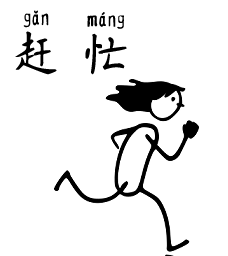
趕忙赶忙 gǎnmáng almost always shows up in a two-part sentence: something happens first (a doorbell, a fall, a warning), and the second half is the hurried response to it. It’s reaction, not routine.
1 Structure
Trigger Clause,S + 趕忙赶忙 gǎnmáng + Verb Phrase
趕忙赶忙 gǎnmáng sits right before the verb it modifies, describing an action taken hastily in response to a trigger — usually something introduced by 聽到听到 tīngdào, 看到看到 kàndào, or 發現发现 fāxiàn.
聽到門鈴聲,我趕忙去開門。听到门铃声,我赶忙去开门。
Hearing the doorbell, I hurried to open the door.
看到老闆走進來,他趕忙把手機收起來。看到老板走进来,他赶忙把手机收起来。
Seeing the boss walk in, he hurriedly put his phone away.
孩子摔倒了,媽媽趕忙跑過去扶他。孩子摔倒了,妈妈赶忙跑过去扶他。
The child fell down, and Mom hurried over to help him up.
發現快遲到了,他趕忙抓起書包衝出門。发现快迟到了,他赶忙抓起书包冲出门。
Realizing he was about to be late, he hurriedly grabbed his bag and rushed out the door.
聽說颱風要來了,大家趕忙把陽台的東西收進屋裡。听说台风要来了,大家赶忙把阳台的东西收进屋里。
Hearing that a typhoon was coming, everyone hurriedly brought the balcony items inside.
電話一響,她趕忙接起來,深怕錯過重要消息。电话一响,她赶忙接起来,深怕错过重要消息。
The moment the phone rang, she hurriedly picked it up, afraid of missing important news.
看到客人到了,服務生趕忙上前招呼。看到客人到了,服务生赶忙上前招呼。
Seeing the guests arrive, the waiter hurried over to greet them.
Fun Fact
Taiwan is famous for being one of the most charitable countries in the world, so it’s common to see people fundraising on the street — some legit, some outright 詐騙诈骗 zhàpiàn (scams). If one locks eyes with you, you really do need to 趕忙赶忙 gǎnmáng past them, because once they’ve got you in their sights, they can follow you for three or more 紅綠燈红绿灯 hónglǜdēng (traffic lights) before giving up.
2 Common Mistakes
Most errors come from using 趕忙赶忙 gǎnmáng as a command, or misplacing it after the verb instead of before it.
❌
你趕忙一點,我們要遲到了!你赶忙一点,我们要迟到了!
✅
你快一點,我們要遲到了。你快一点,我们要迟到了。
趕忙赶忙 gǎnmáng describes someone’s own hurried reaction to something that already happened — it’s not used to command another person to hurry up. For urging someone to hurry, plain 快快 kuài works instead, not 趕忙赶忙 gǎnmáng.
❌
聽到門鈴聲,我去開門趕忙。听到门铃声,我去开门赶忙。
✅
聽到門鈴聲,我趕忙去開門。听到门铃声,我赶忙去开门。
趕忙赶忙 gǎnmáng is an adverb and must sit directly in front of the verb phrase it modifies — right after the subject — never tacked on at the end of the clause.
3 趕忙赶忙 vs 趕緊赶紧
Both mean “hurriedly,” but only one of them can order someone around.
|
趕忙赶忙 gǎnmáng |
趕緊赶紧 gǎnjǐn |
| Meaning |
Hurriedly, in a rush — reacting to something |
Quickly, without delay — urging immediate action |
| Can it be a command? |
No — only describes what someone actually did |
Yes — very common in imperative sentences |
| Needs a trigger? |
Usually — a sound, sight, or realization sets it off |
Not necessarily — can express urgency on its own |
| Example |
聽到門鈴聲,我趕忙去開門。听到门铃声,我赶忙去开门。 |
你趕緊去睡覺,明天還要早起。你赶紧去睡觉,明天还要早起。 |
4 Practice
Translate each sentence into Chinese, then tap the card to check your answer.
01Hearing the baby cry, she hurried into the room.
聽到嬰兒哭聲,她趕忙走進房間。听到婴儿哭声,她赶忙走进房间。
👆 Tap to reveal
02Seeing it start to rain, they hurriedly closed the windows.
看到下雨了,他們趕忙把窗戶關上。看到下雨了,他们赶忙把窗户关上。
👆 Tap to reveal
03Realizing he’d made a mistake, he hurriedly apologized.
發現自己說錯話,他趕忙道歉。发现自己说错话,他赶忙道歉。
👆 Tap to reveal
04Hearing footsteps outside, the students hurriedly quieted down.
聽到外面的腳步聲,學生們趕忙安靜下來。听到外面的脚步声,学生们赶忙安静下来。
👆 Tap to reveal
05Seeing the bus pull up, she hurried to catch it.
看到公車來了,她趕忙追上去。看到公车来了,她赶忙追上去。
👆 Tap to reveal
06Hearing the fire alarm, everyone hurried to leave the building.
聽到火警警報,大家趕忙離開大樓。听到火警警报,大家赶忙离开大楼。
👆 Tap to reveal
07Seeing the teacher approaching, the kids hurriedly put away their phones.
看到老師走過來,孩子們趕忙把手機收起來。看到老师走过来,孩子们赶忙把手机收起来。
👆 Tap to reveal
08Hearing his name called, he hurried to the stage.
聽到自己的名字被叫到,他趕忙走上台。听到自己的名字被叫到,他赶忙走上台。
👆 Tap to reveal
09Seeing the milk boiling over, she rushed to turn off the stove.
看到牛奶滾出來了,她趕忙關掉爐火。看到牛奶滚出来了,她赶忙关掉炉火。
👆 Tap to reveal
10Hearing the news, he hurriedly called his family.
聽到這個消息,他趕忙打電話給家人。听到这个消息,他赶忙打电话给家人。
👆 Tap to reveal
