Skip to content

OneDotDot Chinese

Learn a little Chinese every day

Menu
  • Pronunciation
  • Vocabulary
    • HSK 3.0 Voc
    • Topic Center
    • Professional Field
    • Food Words
    • Synonyms
    • Chinese Slang
  • Grammar
    • Foundation
    • A1 Grammar (HSK 1)
    • A2 Grammar (HSK 2)
    • B1 Grammar (HSK 3)
    • B1 Grammar (HSK 4)
    • B2 Grammar (HSK 5)
    • B2 Grammar (HSK 6)
    • C1-C2 Grammar (HSK 7-9)
  • Resources
    • Characters
    • Chinese Name
    • Conversation
    • Cooking Chinese Food
    • Story with Audio
    • Songs
    • Download
    • Chinese Festivals
  • Practice
    • Grammar
    • Reading
    • Listening
  • Shop
Menu
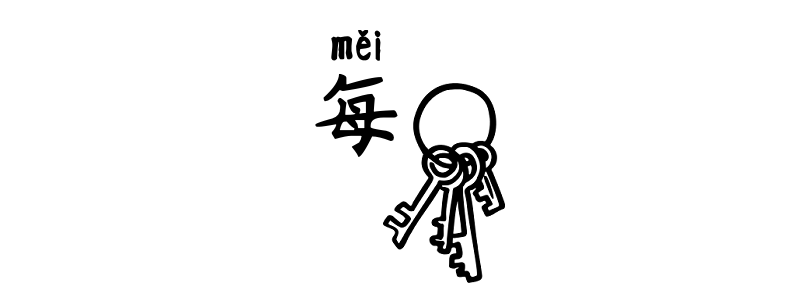
Every in Chinese 每 mei grammar

每 měi + Time expression

Posted on June 22, 2026June 22, 2026 by tiffany

Table of Contents

Toggle
  • Structure
    • 每 měi + time expression + V (+ O)
  • 每 měi with 就 jiù and 才 cái

  • Text Display
  • ►Traditional
  • ►Simplified
  • Pinyin Display
  • ►Visible
  • ►Mouseover
  • ►Hidden

Grammar Point:
每 měi + time expression means “every / each + period of time”. It is used to talk about something that happens regularly or repeatedly.

Structure

每 měi + time expression + V (+ O)

他tā每天měitiān學xué中文zhōngwén他tā每天měitiān学xué中文zhōngwén
He studies Chinese every day.

我wǒ每měi星期xīngqí上shàng兩次liǎngcì課kè我wǒ每měi星期xīngqī上shàng两次liǎngcì课kè
I have class twice a week.

我wǒ每měi個ge月yuè去qù一次yícì旅行lǚxíng我wǒ每měi个ge月yuè去qù一次yícì旅行lǚxíng
I travel once every month.
The object can be placed either before or after “times.”

我wǒ每měi年nián回huí台灣Táiwān我wǒ每měi年nián回huí台湾Táiwān
I return to Taiwan every year.

每měi三天sāntiān吃chī一次yícì藥yào每měi三天sāntiān吃chī一次yícì药yào
Take medicine once every three days.

我wǒ每měi兩天liǎngtiān運動yùndòng一次yícì我wǒ每měi两天liǎngtiān运动yùndòng一次yícì
I exercise every two days.

火車huǒchē十shí分鐘fēnzhōng來lái一班yìbān火车huǒchē十shí分钟fēnzhōng来lái一班yìbān
A train comes every ten minutes.

📌 In daily conversation, when using the structure “每 + number + time + Verb + times,” 每 měi can sometimes be dropped.

每 měi with 就 jiù and 才 cái

他tā每měi半年bànnián去qù一次yícì中國Zhōngguó他tā每měi半年bànnián去qù一次yícì中国Zhōngguó
He goes to China once every six months.
It simply describes a routine frequency with no emotional tone, just neutral information.

他tā每měi半年bànnián就jiù去qù一次yícì中國Zhōngguó他tā每měi半年bànnián就jiù去qù一次yícì中国Zhōngguó
He goes to China every six months (already!).
就 jiù adds emphasis and suggests that something happens “already that often,” sometimes with a sense of surprise or expectation.

他tā每měi半年bànnián才cái去qù一次yícì中國Zhōngguó他tā每měi半年bànnián才cái去qù一次yícì中国Zhōngguó
He only goes to China once every six months.
才 cái expresses low frequency, implying that something happens too infrequently from the speaker’s perspective and focusing on the idea that it is not enough.

Do you like it? 🙂

📗 Contemporary Chinese
➤ Book 1
➤ Book 2
➤ Book 3
➤ Book 4

  • LinkedIn
  • Instagram
線上課程
One-on-one online teaching platform
線上課程

OneDotDot Chinese

Whenever I ask foreigners, "Do you speak Chinese?" they often reply, "a little bit" (yì diǎn diǎn). That inspired me to create this website and translate "yì diǎn diǎn" into the quirky and fun "One Dot Dot."

It’s also a reminder that learning Chinese is a journey, and progress happens one step at a time. By learning just a little bit every day, you’ll go far!

  About me
  Special Thanks
  News
  My Students Only
  Privacy Policy

© 2026 OneDotDot Chinese | Powered by Superbs Personal Blog theme