鸡肉与鸡蛋Chicken & Eggs in Chinese
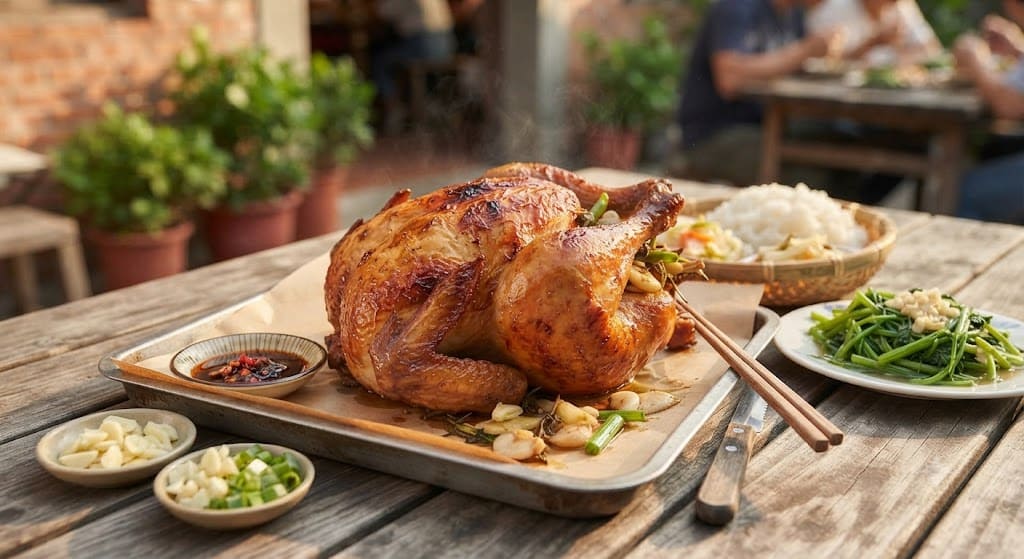
The rooster’s name is a lucky pun in Chinese — which is part of why it shows up at weddings, and part of why pointing its head at someone across a dinner table is such a pointed joke. Work through the words for chicken types, parts, eggs, and dishes below, then a few phrases for ordering.
Why a rooster shows up at Chinese weddings
雞鸡 (“chicken”) sounds close enough to 吉吉 (“auspicious/lucky”) that the rooster has picked up a reputation as a good-luck bird. In parts of Shandong, a live hen is still worked into wedding ceremonies for exactly this reason.
The flip side: if your boss takes you out to dinner and casually turns the chicken’s head to point at you, that’s not an accident — it’s an old, gentler-than-words way of warning someone their job is about to end.
Types of Chicken
The words you’ll see on a menu or at the butcher before you even get to a specific cut.
| Chinese | English | Korean | Japanese |
|---|
Chicken Parts
Mostly identical across the strait, with one delightful exception near the bottom of the table.
| Chinese | English | Korean | Japanese |
|---|
Nobody wants to say “chicken butt” on a menu
Taiwan’s night markets sidestep the issue with 七里香七里香 — literally “seven-mile fragrance” — as a much more appetizing stand-in for what is, anatomically, the tail.
Eggs
However you like them cooked, chances are there’s already a specific word for it.
| Chinese | English | Korean | Japanese |
|---|
Chicken Dishes & Chicken Food
From night-market snacks to imported fast-food classics.
A Favorite: Bucket Chicken
桶子雞桶子鸡 / 甕仔雞瓮仔鸡 — whole chicken roasted upright in a bucket
The skin gets a coat of honey, the cavity is stuffed with onion, garlic, and spices, and the whole bird roasts standing up inside a bucket until the skin turns crisp while the inside stays juicy.
The traditional way to eat it: pull the meat off the bone with your hands, dip it in the chicken’s own drippings, then coat it in pepper salt — a seasoning blend that shows up all over Chinese cooking. The onion and garlic stuffing is meant to be eaten right alongside the meat, not left behind.
Watch it being made →Ordering at the Table
Three everyday phrases, each one showing off a different trad/simp swap.

