Chinese Vocabulary · 中文词汇
Nature and Transportation Words in Chinese
自然与交通词汇 zìrán yǔ jiāotōng cíhuì
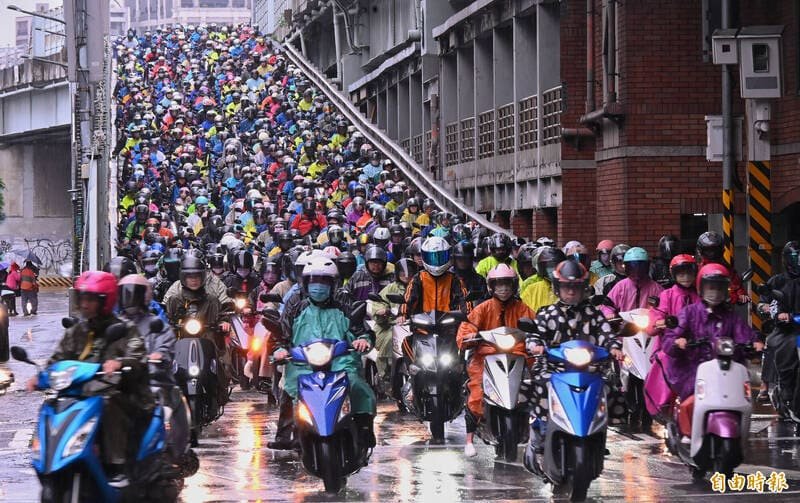
Taiwan is famous for its scooters, and rainy days are when you see a sea of colorful raincoats on the road. That is why weather words and traffic words belong together in this lesson: when the sky turns dark and a 暴雨 (bàoyǔ) arrives, the way everyone gets around changes completely.
Sky and land
Weather and Nature Words in Chinese
| Chinese | Pinyin | English | Korean | Japanese |
|---|---|---|---|---|
| 暴雨 | bàoyǔ | Heavy rain; rainstorm | 폭우 | 豪雨 |
| 河流 | héliú | River; rivers | 하천 | 河川 |
| 湖 | hú | Lake | 호수 | 湖 |
| 降水 | jiàngshuǐ | Precipitation | 강수 | 降水 |
| 陆地 | lùdì | Land; dry land | 육지 | 陸地 |
| 沙漠 | shāmò | Desert | 사막 | 砂漠 |
| 沙子 | shāzi | Sand | 모래 | 砂 |
| 升温 | shēngwēn | To warm up; temperature rise | 기온이 오르다 | 気温が上がる |
| 天空 | tiānkōng | Sky | 하늘 | 空 |
| 雾 | wù | Fog; mist | 안개 | 霧 |
| 雨水 | yǔshuǐ | Rainwater; rainfall | 빗물 | 雨水 |
暴雨 (bàoyǔ), 雨水 (yǔshuǐ) and 降水 (jiàngshuǐ)
暴雨 (bàoyǔ) is a sudden, very heavy rain. 雨水 (yǔshuǐ) is rainwater, the water that falls as rain and collects on the ground or in a bucket. 降水 (jiàngshuǐ) is the technical word used in weather reports for all precipitation, including rain, snow and hail.
Putting it all together
Examples
天空突然變黑,接著下起了暴雨天空突然变黑,接着下起了暴雨The sky suddenly turned dark, and then a heavy rain started.
沙漠裡白天升溫很快,晚上卻很冷沙漠里白天升温很快,晚上却很冷In the desert, the temperature rises quickly during the day, but it is very cold at night.
Roads, rails and skies
Transportation and Vehicle Words in Chinese
| Chinese | Pinyin | English | Korean | Japanese |
|---|---|---|---|---|
| 车祸 | chēhuò | Car accident | 교통사고 | 交通事故 |
| 车库 | chēkù | Garage | 차고 | 車庫 |
| 车辆 | chēliàng | Vehicle; vehicles | 차량 | 車両 |
| 车厢 | chēxiāng | Train carriage; compartment | 객차; 차량 칸 | 車両; 客車 |
| 车主 | chēzhǔ | Vehicle owner | 차주 | 車の持ち主 |
| 飞行员 | fēixíngyuán | Pilot | 조종사 | パイロット |
| 驾驶 | jiàshǐ | To drive; to pilot | 운전하다 | 運転する |
| 驾照 | jiàzhào | Driver’s license | 운전면허증 | 運転免許証 |
| 列车 | lièchē | Train | 열차 | 列車 |
| 铁路 | tiělù | Railway | 철도 | 鉄道 |
| 行驶 | xíngshǐ | To travel; to run (of a vehicle) | 주행하다 | 走行する |
| 站台 | zhàntái | Platform | 승강장 | ホーム |
站台 (zhàntái) vs 月台 (yuètái)
Both mean “platform” at a train station. Mainland China says 站台 (zhàntái), while Taiwan says 月台 (yuètái).
驾驶 (jiàshǐ) vs 行驶 (xíngshǐ)
The difference is who does the action. 驾驶 (jiàshǐ) is for a person who drives or pilots something. 行驶 (xíngshǐ) is for a vehicle that is traveling, like “the bus is running on the road.” A 驾照 (jiàzhào) is the license that lets you 驾驶 (jiàshǐ).
Putting it all together
Examples
他駕駛很小心,所以從來沒出過車禍他驾驶很小心,所以从来没出过车祸He drives very carefully, so he has never had a car accident.
列車進了月台,車廂的門就打開了列车进了站台,车厢的门就打开了When the train pulled into the platform, the carriage doors opened.
Test yourself
Vocabulary Quiz


