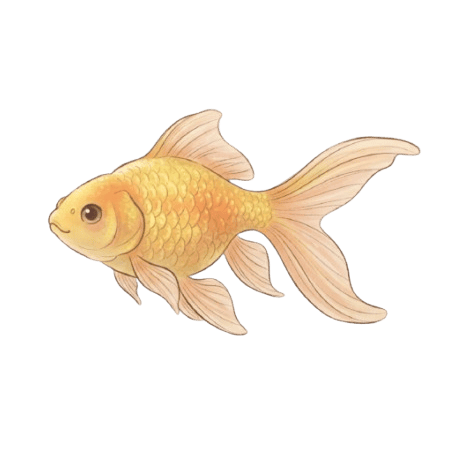
Goldfish Brain
名词 NOUN
Literally “goldfish brain.” Just like the English phrase “the memory of a goldfish,” we use it for people who forget things quickly and have a poor memory.
One grammar note worth remembering: normally a noun follows 有 yǒu (“to have”), but in this phrase we use 是 shì (“to be”) instead — 是金鱼脑, not 有金鱼脑.
It’s not a rude expression. It gets used constantly between friends (pair it with a laughing emoji, not an angry one) or self-deprecatingly about yourself.
例句
对话
辨析
Chinese has a few different ways to call someone forgetful or scatterbrained — they land in different places.
| Term | What it actually means | Tone |
|---|---|---|
| 金鱼脑jīnyú nǎo | Forgets specific things fast — the goldfish comparison is the whole joke | Playful, affectionate |
| 健忘jiànwàng | Generally forgetful — can describe age-related or chronic forgetfulness | Neutral, more formal |
| 恍神huǎngshén | Zoning out or spacing out for a moment — not about memory at all, just not paying attention | Casual, momentary |
| 少根筋shǎo gēn jīn | “Missing a tendon” — scatterbrained or oblivious in a broader sense, not just forgetful | Teasing, can sting a bit more |
The quick test: 金鱼脑 is specifically about forgetting things, 恍神 is about attention in the moment, and 少根筋 covers a wider kind of obliviousness.
快闪卡
Tap a card to flip it.
跨语言
The “short memory” stereotype travels well — Korean and Japanese both have their own version of it.
Forgot again? Do you have a goldfish’s memory?
I have a bird brain — I forgot yesterday’s promise.

